
The Prototyping-First Studio: Why Validation Comes Before Building in 2026
by OOX Limited
Most game ideas fail before a real player ever touches them. Not because the teams lacked skill or creativity. Because they committed months - sometimes years - of production budget to concepts never tested against anything but internal assumptions.
In 2026, the studios that survive are not the ones with the largest initial budgets. They are the ones that validate before they build. A structural shift is under way: prototype first, test with real players, measure hard KPIs, then decide whether to scale.
GDC 2026 surfaced financing restructure and co-development as two of the five defining themes of the year. Publisher behaviour has shifted from funding promises to demanding proof. The Unity 2026 Game Development Report and NipsApp's studio data tell the same story: validation-first is the production model of the studios that will still operate in 2027.

Why the Old Model Lost Ground
The traditional development pipeline assumes the game works before it has been tested.
The old sequence is familiar: a studio produces a full game design document, builds a polished vertical slice, pitches publishers on creative vision and team pedigree, and - if funded - enters full production. Real players encounter the game only at soft launch, months or years into development, after most of the budget has been spent.
The core assumption - the idea is right and the job is execution - is contradicted by the data. Approximately 90% of digital products fail commercially. Among mobile games, 83% fail within three years and 43% never make it past development, per SuperScale. Logic Simplified found that 70% of game companies burn through their budget before reaching launch.
The root cause is not a shortage of talent. It is committing to full production before evidence exists that the core loop engages players. Publishers funded on promise, not validated behaviour. By the time retention data surfaced, runway was gone.
The 2022-2026 period exposed the model's fragility. Over 44,000 game developers were laid off globally across those four years - a period that also produced record industry revenues, the record-profits-record-layoffs paradox identified by Epyllion and the GDC 2026 Trends Report. NipsApp's 2026 study found that studios skipping early prototyping spent two to three times longer debugging core gameplay after milestone three. The old model did not fail because the games were badly made. It failed because "should we build this?" was asked too late.
Why the New Model Works
A prototype answers the only question that matters before a single unit of production budget is committed.
The prototype-first model inverts the old sequence. A studio defines the riskiest assumption - the core mechanic, the session loop, the player motivation - and builds a stripped-down, playable version in weeks. That prototype goes in front of real players. Hard KPIs are measured: cost per install, Day 1 retention, playtime. Only when the numbers signal a viable product does production scaling begin.
The Unity 2026 Game Development Report captures the shift in hard numbers. Sixty-seven percent of developers now spend three months or less on prototyping. Forty-eight percent of studios have become more selective about which prototypes advance. Fifty-two percent prioritize smaller, scoped projects as their primary risk-reduction strategy.
The outcome data is direct. NipsApp's 2026 study found that teams investing 30 to 40% of their timeline in pre-production saw 65% fewer rebuilds after milestone three. Studios that validated the core loop before art direction or narrative shipped 20% faster. Weekly playable builds correlated with 1.45 times faster overall delivery.
This is not a budgeting tactic. It is a production philosophy that treats assumptions as liabilities and player behaviour as the only reliable decision input. See OOX's validation process.
The Design and Philosophy Shift
Building less is not the goal.
Learning faster is the goal.
The prototype-first model changes what a studio optimizes for. The old model rewarded output. The new model rewards learning velocity: how quickly the team discovers which ideas deserve production investment and which do not.
This has specific design implications. A validation prototype is deliberately unpolished:
No advanced graphics
No large content libraries
No monetization systems
No full progression architecture
It tests exactly the core loop and nothing else - because if the core loop does not hold a player, nothing layered on top of it matters.
The tools enabling this approach have matured. AI-assisted coding - adopted by 62% of developers, per the Unity 2026 Report - accelerates iteration. Poki's playtesting platform enables 500-player tests twice daily with video footage and drop-off analytics. Itch.io provides concept validation at near-zero cost. The barrier is no longer technical. It is the willingness to test before building.
How OOX Approaches Prototyping-First Development
OOX was built around the principle that validation comes before production.
We deliver playable prototypes in 2 to 6 weeks, depending on scope and complexity. The team - Unity and Unreal developers, UI/UX designers, technical artists, and product specialists - works across five prototyping categories: Unity rapid prototyping, game prototype development, 3D interactive prototyping, mobile app prototyping, and cross-platform builds from a single codebase.
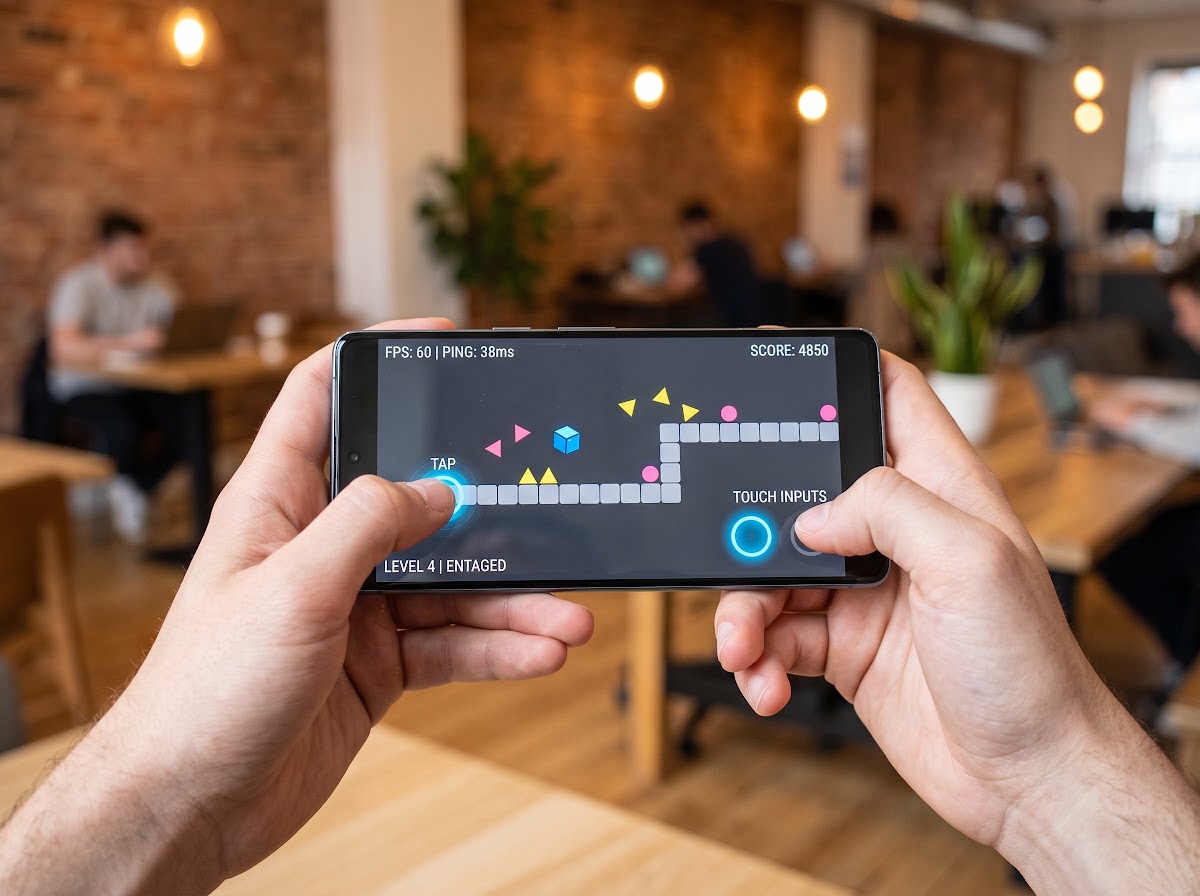
The output is not a slide deck. It is an interactive prototype that tests core mechanics, user experience, and technical feasibility - one of the strongest tools available for pitching investors or publishers. Each prototype includes structured validation: what works, what needs revision, and what should be removed.
The prototyping phase is a decision gate, not an upsell. OOX can carry a validated prototype through to full-cycle production, but the two stages are distinct. The purpose of the prototype is to answer one question with data, not opinion: should we keep building this?
What Validation-First Looks Like in Practice
Sword Island: Samurai
OOX's own shipped title - now available on Google Play - moved from concept through prototype validation to full launch. The project tested its core combat loop early, before art production or content expansion, ensuring the fundamental experience was sound before resources scaled. The result was a completed title that reached the store.
Celeste
Celeste began as a four-day game jam build on Itch.io. The core mechanic - a directional dash with a single-use reset - was playable and testable almost immediately. Player response to that prototype drove the decision to expand into a full title that became one of the most critically acclaimed indie releases of its generation. The prototype did not answer "can we build a platformer?" It answered "does this specific mechanic feel good enough to build an entire game around?"
The studios that succeed are not the ones whose first idea was best. They are the ones that tested fastest.
What This Means for Publishers and Studios
The publisher-developer relationship is being rewritten around proof, not promise.
At GDC 2026, the official trends report identified co-development, generative AI, and game financing as three of the five defining industry themes - a structural shift that rewrites the traditional publisher role.
Jason Della Rocca's term "Inception Publishing" captures the new reality: developers must begin the publishing process themselves before any publisher will engage. The Minimum Viable Pitch in 2026 is a playable prototype, a live Steam page and trailer, community validation, and hard KPIs - essentially everything required to self-publish.
At Pocket Gamer Connects Barcelona 2026, Tilting Point's Asi Burak stated that "publishers need to earn their place" and that the developer-publisher relationship "should be grounded in outcomes, not promises," as reported by PocketGamer.biz. Traditional 30 to 50% revenue shares, GameBiz Consulting's Nikola Cavic noted, are increasingly difficult to justify.
By the time a studio proves publisher-worthiness - validated prototype, community traction, measurable KPIs - it may be close enough to self-publish. Choosing the right partner in this environment becomes a strategic decision about what a publisher or development partner actually adds.
For studios, the implication is clear: prototype validation is not a preliminary step before the "real work" of production. It is the work. For publishers, the signal has flipped: a studio that arrives with validated prototypes and player data has already completed the hardest phase of development.
Ready to Validate Your Game Idea?
OOX Limited can help you move from concept to playable prototype in weeks, with the structured validation data needed to make a confident kill-or-scale decision. Whether you are preparing a publisher pitch or testing whether your core loop deserves production investment, a short conversation is usually enough to clarify scope, priorities, and the fastest path forward.
A prototype should not answer: "Can we build this?" It should answer: "Should we keep building this?" In 2026, that distinction is not just smart process. It is survival.
Ready to Validate Your Game Idea?
OOX Limited can help you move from concept to playable prototype in weeks, with the structured validation data needed to make a confident kill-or-scale decision. Get in touch to discuss your project.