OOX Limited

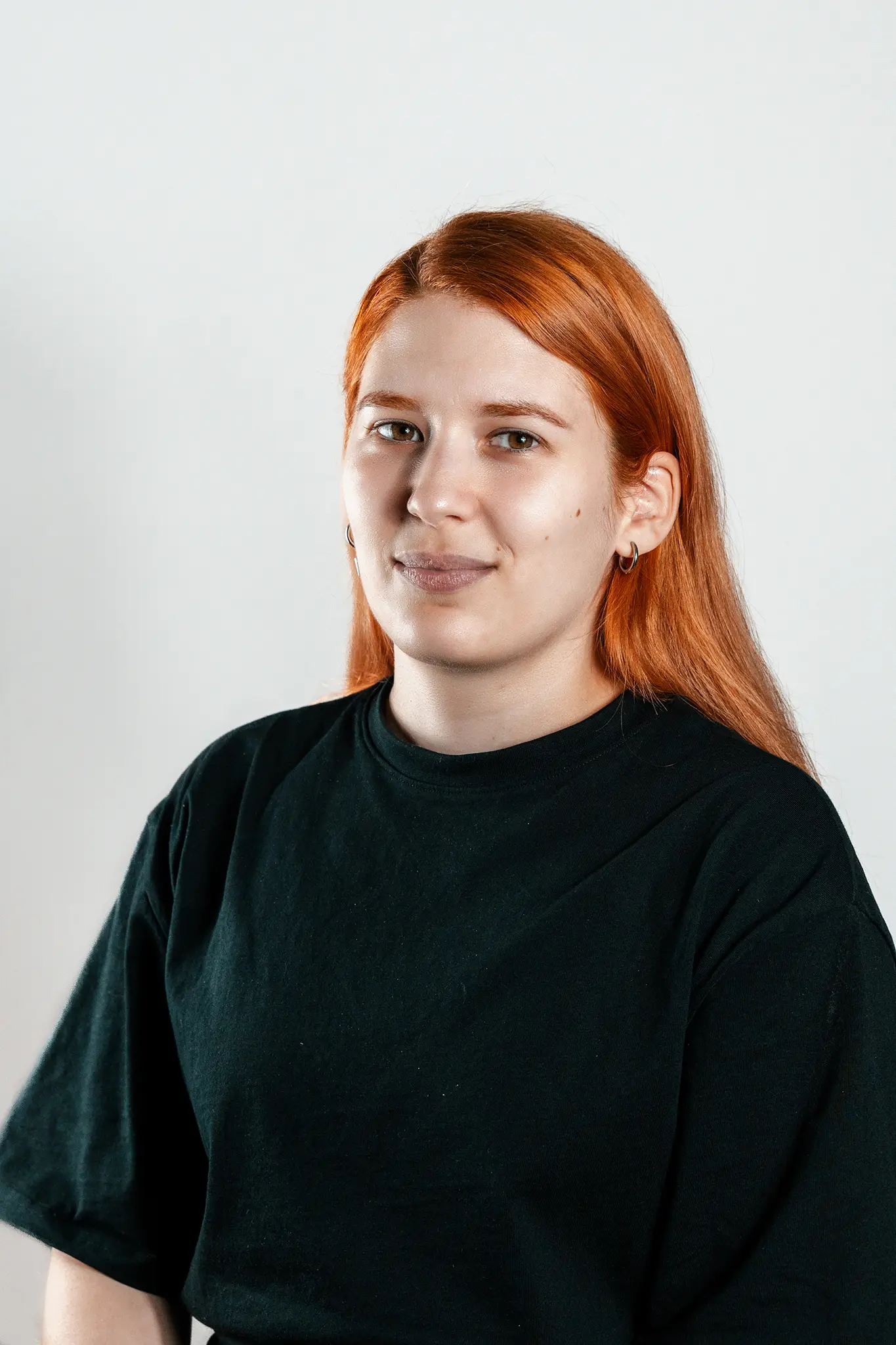
Aleksandra Bulajić

3D Artist
Aleksandra Bulajić

Aleksandra Bulajić is a 3D Artist within our game development team, specializing in 3D game art, environment design, and asset creation for mobile game development. With a strong foundation in art fundamentals and a practical understanding of production constraints, she focuses on clarity, clean silhouettes, and cohesive visual storytelling.

Her work balances artistic intention with technical efficiency, ensuring that assets not only look polished but perform well within real-time game environments. Simplicity, consistency, and immersion define her approach to game art design.

SKILLS

  • 3D modeling
  • Texturing
  • UV unwrapping
  • 3D animation
  • Rigging
  • Set dressing
  • Level Design

PROGRAMS

  • Blender
  • Unity
  • Substance Painter
  • Photoshop

Aleksandra Bulajić

3D Artist

Aleksandra Bulajić is a 3D Artist within our game development team, specializing in 3D game art, environment design, and asset creation for mobile game development. With a strong foundation in art fundamentals and a practical understanding of production constraints, she focuses on clarity, clean silhouettes, and cohesive visual storytelling.

Her work balances artistic intention with technical efficiency, ensuring that assets not only look polished but perform well within real-time game environments. Simplicity, consistency, and immersion define her approach to game art design.

Q&A

I realized it when I understood that I didn’t want to just “get by.” 3D art stopped being a hobby when I saw that it could shape my future. It became less about creating something cool in my free time and more about building a skill set with direction and long-term value. That shift in mindset made me approach learning with discipline. I began thinking not just as an artist, but as someone preparing for professional game production.
Films, especially animated films and series. I’m inspired by the way they build emotionally rich and visually cohesive worlds. Animated productions push stylization and storytelling through design in a way that deeply resonates with me. I pay close attention to lighting, color scripts, environment storytelling, and small visual details that make scenes feel alive. Those principles translate directly into 3D environment art for games.
While university didn’t focus heavily on industry-standard 3D tools, it significantly strengthened my artistic foundation. I developed a deeper understanding of composition, color theory, form, and visual balance. Technical software can always be learned independently. Understanding visual language and artistic structure is what creates strong, consistent 3D game art.
By keeping it simple. Simplicity doesn’t mean lowering quality, it means improving clarity. In mobile game development especially, overcomplicated assets can create performance issues. I focus on clean silhouettes, readable shapes, and intentional detailing. Strong design doesn’t require excessive geometry. It requires thoughtful execution.
Optimization starts at the beginning. I consider polycount, texture sizes, and asset efficiency during the creation phase rather than trying to fix performance issues later. Planning early makes the entire game art pipeline smoother. The goal is to maintain visual quality while respecting mobile platform constraints.
We follow a structured workflow, which reduces unnecessary friction. Proper naming, exporting, importing, and organization allow assets to integrate smoothly into the engine. Clear processes allow everyone to focus on their responsibilities efficiently. And when challenges arise, strong developer collaboration ensures quick solutions.
Fusion Brawl was the first project where I created and animated characters, making it particularly meaningful. I also designed and textured the environment, including hand-painted details. It was a full creative process, from modeling to final presentation, combining technical execution with artistic storytelling.