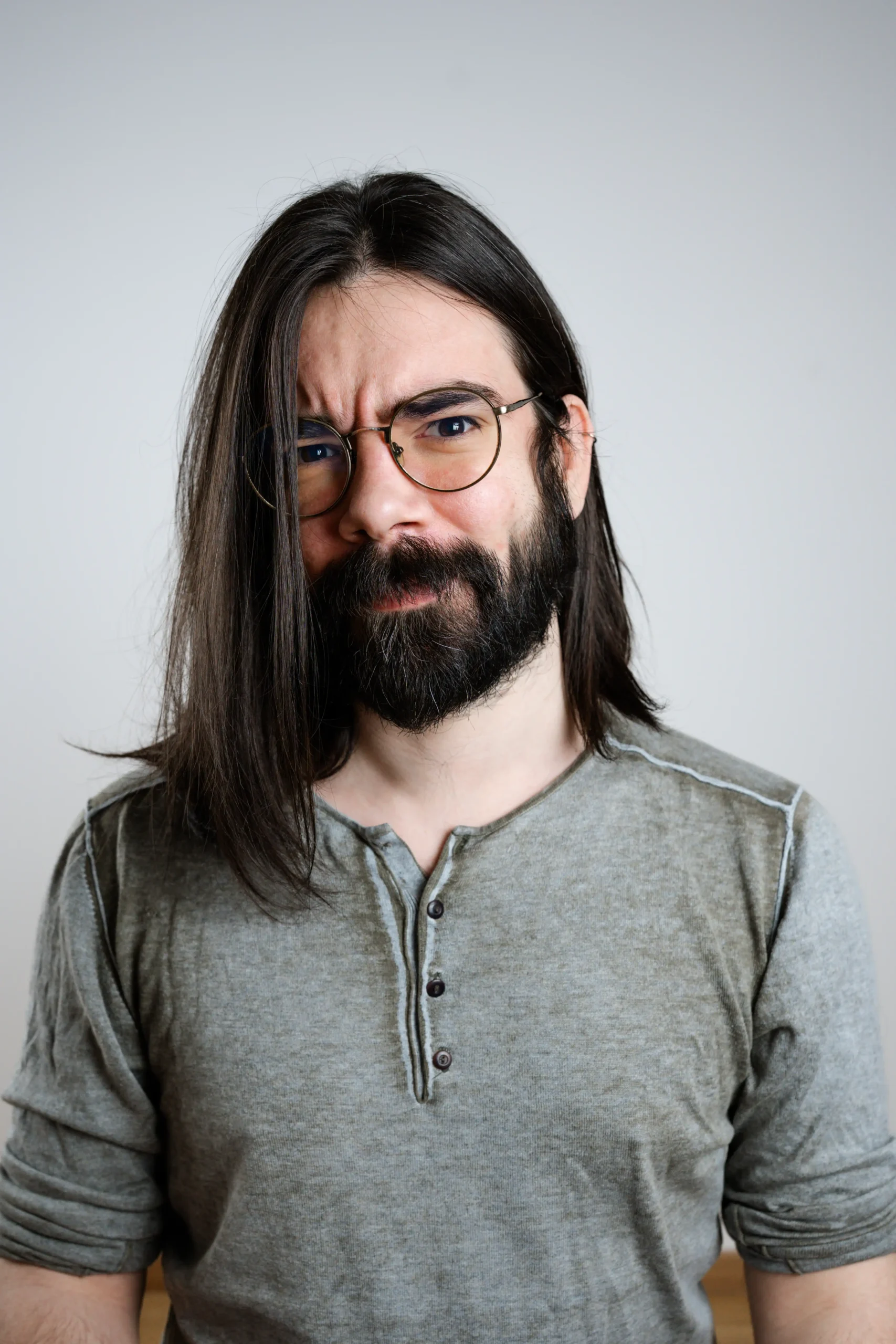
Bojan Marjanović is a Technical Artist within our game development team, operating at the intersection of art and engineering. With over a decade of production experience, he specializes in shaders, procedural systems, scalable art pipelines, and performance optimization.
His work connects visual quality with technical feasibility. He builds art systems that stay expressive and efficient. As a result, these systems remain stable and scalable in real-time environments, especially in mobile game development.
SKILLS
Illustration
3D modeling
Texturing
Rigging
Houdini
VFX
Procedural generation
Scipriting/Programming
PROGRAMS
Adobe
Blender
Unity
Substance
Houdini
Bojan Marjanović
Senior Technical Artist
Bojan Marjanović is a Technical Artist within our game development team, operating at the intersection of art and engineering. With over a decade of production experience, he specializes in shaders, procedural systems, scalable art pipelines, and performance optimization.
His work connects visual quality with technical feasibility. He builds art systems that stay expressive and efficient. As a result, these systems remain stable and scalable in real-time environments, especially in mobile game development.
Q&A
I initially moved into technical responsibilities almost by coincidence. My first company didn’t have a dedicated technical artist, only artists and programmers. Those of us who were comfortable stepping outside traditional art tools naturally began handling more technical tasks.Once I became more comfortable with scripting, I realized this hybrid space gave me a level of control that pure art didn’t. Technical understanding empowers artists, not only for personal expression, but for building tools, improving pipelines, and supporting teams.
There wasn’t a single defining moment. It was gradual. Over time, scripting and implementation filled a gap in my creative process.Eventually, it became clear that the space between art and technology is where I function best.
Friends, family, hobbies, and personal projects.
“Svako je lud na svoj način.”
Revelations. Overcoming hardships and the self. Taking ownership of my own failings.
It was chaotic. I didn’t have a single mentor with a complete understanding of Technical Art. Knowledge came piece by piece, from coworkers, tutorials, blog posts, research papers, and experimentation.Testing concepts in practice was the only way to truly understand them. The industry evolves constantly, and keeping up requires continuous learning.
First, usability matters. There’s no value in creating systems that people don’t understand.Second, existing habits and architecture must be respected, naming conventions, documentation, and workflow clarity are critical.Finally, alignment is key. Building scalable pipelines requires permission, resources, and time, which production environments rarely prioritize. Ideally, R&D would happen early, but reality often demands compromises.
Ideally, optimization should happen continuously throughout production. Keeping the game below minimum requirements early reduces long-term profiling overhead.In reality, optimization is often postponed until late stages, which forces removal or modification of VFX and visual features. Sustainable development requires early system definition and technical R&D.
In personal work: Procedural foliage generation with procedural materials. Procedural optimized skybox with lighting and weather support. Stylized and realistic fire shaders.In production: Stylized lit matcap shading with atlas support. Fake 3D rendering in a 2D engine with simulated lighting and VFX. Procedural curve-based Unity assets created in Houdini.
Blender Photoshop After Effects UnityFor shaders, I prefer writing them manually. Node-based tools like Shader Graph or Amplify are used when appropriate, but manual control comes first.
It’s difficult to define. The technical artists I respect often operate like researchers or experimental artists, investing personal time into exploration and innovation.At the same time, delivering within constraints is equally valuable. Great technical art balances innovation with production reality.
Possibly toward graphics programming, procedural generation, advanced materials, assets, animation, characters, and VFX.I could see transitioning into a more programming-centric role with further training, or even a generalist or production-support role, given my broad understanding of game development systems.